Powered by Blogger.
Showing posts with label Grammar. Show all posts

Wednesday, June 25, 2014

A. Study this example situation:
yesterday morning 
Yesterday morning I got up and looked out of the window.
The sun was shining, but the ground was very wet.
lt had been raining.
lt was not raining when I looked out of the window;
the sun was shining. But it had been rain ing before.
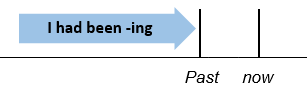
Had been -ing is the past perfect continuous:

I/we/they/you
he/she/it 
had
(= I'd etc.)

(=he'd etc.)
been
doing
working

playing etc.
Some more examples:
¡ When the boys came into the house, their clothes were dirty, their hair was untidy and one of
them had a black eye. They'd been fighting.
¡ I was very tired when I got home. I'd been working hard all day.
¡ When I went to Madrid a few years ago, I stayed with a friend of mine. She hadn't been
Living there very long, but she knew the city very well.

B. You can say that something had been happening for a period of time before something else happened:
¡ We'd been playing tennis for about half an hour when it started to rain heavily.
¡ Paul went to the doctor last Friday. He hadn't been feeling well for some time.


C. Compare have been -ing (present perfect continuous) and had been -ing (past perfect continuous):
Present perfect continuous


¡ I hope the bus comes soon. I've been
waiting for 20 minutes. (before now)
¡ James is out of breath. He has been
running.
Past perfect continuous


¡ At last the bus came. I'd been waiting
for 20 minutes. (before the bus came)
¡ James was out of breath. He had been
running.

D. Compare was -ing (past continuous) and had been -ing:
¡ It wasn't raining when we went out. The sun was shining. But it had been raining,
so the ground was wet.
¡ Katherine was sitting in an armchair resting. She was tired because she'd been working
very hard.

E. Some verbs {for example, know and Like) are not normally used in the continuous:
¡ We were good friends. We had known each other for years. (not had been knowing)
¡ I was surprised when Lisa cut her hair. She'd had long hair since I first met her.
(not she'd been having)

For a list of these verbs, see Unit 4A. For have, see Unit 17.
Grammar

UNIT 16 Past perfect continuous (I had been doing)

Posted by Web ratana  |  No comments

A. Study this example situation:
yesterday morning 
Yesterday morning I got up and looked out of the window.
The sun was shining, but the ground was very wet.
lt had been raining.
lt was not raining when I looked out of the window;
the sun was shining. But it had been rain ing before.
Had been -ing is the past perfect continuous:

I/we/they/you
he/she/it 
had
(= I'd etc.)

(=he'd etc.)
been
doing
working

playing etc.
Some more examples:
¡ When the boys came into the house, their clothes were dirty, their hair was untidy and one of
them had a black eye. They'd been fighting.
¡ I was very tired when I got home. I'd been working hard all day.
¡ When I went to Madrid a few years ago, I stayed with a friend of mine. She hadn't been
Living there very long, but she knew the city very well.

B. You can say that something had been happening for a period of time before something else happened:
¡ We'd been playing tennis for about half an hour when it started to rain heavily.
¡ Paul went to the doctor last Friday. He hadn't been feeling well for some time.


C. Compare have been -ing (present perfect continuous) and had been -ing (past perfect continuous):
Present perfect continuous


¡ I hope the bus comes soon. I've been
waiting for 20 minutes. (before now)
¡ James is out of breath. He has been
running.
Past perfect continuous


¡ At last the bus came. I'd been waiting
for 20 minutes. (before the bus came)
¡ James was out of breath. He had been
running.

D. Compare was -ing (past continuous) and had been -ing:
¡ It wasn't raining when we went out. The sun was shining. But it had been raining,
so the ground was wet.
¡ Katherine was sitting in an armchair resting. She was tired because she'd been working
very hard.

E. Some verbs {for example, know and Like) are not normally used in the continuous:
¡ We were good friends. We had known each other for years. (not had been knowing)
¡ I was surprised when Lisa cut her hair. She'd had long hair since I first met her.
(not she'd been having)

For a list of these verbs, see Unit 4A. For have, see Unit 17.

12:06 AM Share:

Saturday, June 21, 2014

A. Study this example situation:
Sarah went to a party last week. Paul went to the
party too, but they didn't see each other. Paul left the
party at 10.30 and Sarah arrived at 11 o'clock. So:
When Sarah arrived at the party, Paul wasn't there.
He had gone home.

Had gone is the past perfect (simple):
I/we/they/you
he/she/it 
          jhad

   (=I 'd etc.)                (= he'd et c.) gone
seen finished etc.


The past perfect simple is had+ past participle (gone/ seen/ finished etc).

Sometimes we talk about something that happened in t he past:
¡ Sarah arrived at the party.
This is the starting point of the story. Then, if we want to talk about things that happened before this
time, we use the past perfect (had ... ):
¡ When Sarah arrived at the party, Paul had already gone home.

Some more examples:
¡ When we got home last night, we found t hat somebody had broken into the flat.
¡ Karen didn't want to go to the cinema with us because she'd already seen the movie.
¡ At first I thought I'd done the right thing, but I soon realised that I'd made a big mistake.
¡ The man sitting next to me on the plane was very nervous. He hadn't flown before.
or ... He had never flown before.

B. Compare the present perfect (have seen etc.) and the past perfect (had seen etc.):

Present perfect


¡ Who is that woman? I've seen her
before, but I can't remember where.
¡ We aren't hungry. We've just had
lunch.
¡ The house is dirty. They haven't
cleaned it for weeks.
Past perfect


¡ I wasn't sure who she was. I'd seen her
before, but I couldn't remember where.
¡ We weren't hungry. We'd just had
lunch.
¡ The house was dirty. They hadn't
cleaned it for weeks.

C. Compare the past simple (Left, was etc.) and the past perfect (had left, had been etc.):

¡ A: Was Tom there when you arrived?
     B: Yes, but he Left soon afterwards.
¡ Kate wasn't at home when I phoned.
 She was at her mother/s house.
¡ A: Was Tom there when you arrived?
     B: No, he had already Left.
¡ Kate had just got home when I phoned.
 She had been at her mother's house.
Grammar

UNIT 15 Past perfect (I had done)

Posted by Web ratana  |  No comments

A. Study this example situation:
Sarah went to a party last week. Paul went to the
party too, but they didn't see each other. Paul left the
party at 10.30 and Sarah arrived at 11 o'clock. So:
When Sarah arrived at the party, Paul wasn't there.
He had gone home.

Had gone is the past perfect (simple):
I/we/they/you
he/she/it 
          jhad

   (=I 'd etc.)                (= he'd et c.) gone
seen finished etc.


The past perfect simple is had+ past participle (gone/ seen/ finished etc).

Sometimes we talk about something that happened in t he past:
¡ Sarah arrived at the party.
This is the starting point of the story. Then, if we want to talk about things that happened before this
time, we use the past perfect (had ... ):
¡ When Sarah arrived at the party, Paul had already gone home.

Some more examples:
¡ When we got home last night, we found t hat somebody had broken into the flat.
¡ Karen didn't want to go to the cinema with us because she'd already seen the movie.
¡ At first I thought I'd done the right thing, but I soon realised that I'd made a big mistake.
¡ The man sitting next to me on the plane was very nervous. He hadn't flown before.
or ... He had never flown before.

B. Compare the present perfect (have seen etc.) and the past perfect (had seen etc.):

Present perfect


¡ Who is that woman? I've seen her
before, but I can't remember where.
¡ We aren't hungry. We've just had
lunch.
¡ The house is dirty. They haven't
cleaned it for weeks.
Past perfect


¡ I wasn't sure who she was. I'd seen her
before, but I couldn't remember where.
¡ We weren't hungry. We'd just had
lunch.
¡ The house was dirty. They hadn't
cleaned it for weeks.

C. Compare the past simple (Left, was etc.) and the past perfect (had left, had been etc.):

¡ A: Was Tom there when you arrived?
     B: Yes, but he Left soon afterwards.
¡ Kate wasn't at home when I phoned.
 She was at her mother/s house.
¡ A: Was Tom there when you arrived?
     B: No, he had already Left.
¡ Kate had just got home when I phoned.
 She had been at her mother's house.

1:14 AM Share:

Friday, June 20, 2014

A. Do not use the present perfect (I have done) when you talk about a finished time (for example,
yesterday I ten minutes ago I in 2005 I when I was a child). Use a past tense:
¡ It was very cold yesterday. (not has been)
¡ Paul and Lucy arrived ten minutes ago. (not have arrived)
¡ Did you eat a lot of sweets when you were a child? (not have you eaten)
¡ I got home late last night. I was very tired and went straight to bed.

Use the past to ask When ... ? or What time ... ?:
¡ When did your friends arrive? (not have ... arrived)
¡ What time did you finish work?

Compare:
Present perfect
¡ Tom has Lost his key. He can't get
into the house.
¡ Is Carla here or has she Left?
Past simple
¡ Tom Lost his key yesterday.
He couldn 't get into the house.
¡ When did Cart a Leave?

B. Compare:
Present perfect (have done)
¡ I've done a lot of work today.
We use the present perfect for a period of time
that continues until now. For example:
today I this week I since 2007.


¡ It hasn't rained this week.
¡ Have you seen Anna this morning?
(it is sti ll morning)
¡ Have you seen Tim recently?
¡ I don't know where Lisa is. I haven't 
seen her. (= I haven't seen her
recently)
¡ We've been waiting for an hour.
(we a re sti ll waiting now)
¡ Jack lives in Los Angeles. He has Lived
there for seven years.
¡ I have never played golf. (in my life)
¡ It's the last day of your holiday. You say:
It's been a really good holiday.
I've really enjoyed it.
Past simple (did)
¡ I did a lot of work yesterday.
We use the past simple for a finished t ime in
the past. For example:
yesterday I last week I from 2007 to 2010.


¡ It didn't rain last week.
¡ Did you see Anna this morning?
(it is now afternoon or evening)
¡ Did you see Tim on Sunday?
¡ A: Was Lisa at the party on Sunday?
     B: I don't think so. I didn't see her.

¡ We waited (or were waiting) for an
hour. (we are no longer waiting)
¡ Jack Lived in New York for ten years.
Now he lives in Los Angeles.
¡ I didn't play golf Last summer.
¡ After you come back from holiday you
say: It was a really good holiday.
I really enjoyed it.
Grammar

UNIT 14 Present Perfect and past 2 (I have done and I did)

Posted by Web ratana  |  No comments

A. Do not use the present perfect (I have done) when you talk about a finished time (for example,
yesterday I ten minutes ago I in 2005 I when I was a child). Use a past tense:
¡ It was very cold yesterday. (not has been)
¡ Paul and Lucy arrived ten minutes ago. (not have arrived)
¡ Did you eat a lot of sweets when you were a child? (not have you eaten)
¡ I got home late last night. I was very tired and went straight to bed.

Use the past to ask When ... ? or What time ... ?:
¡ When did your friends arrive? (not have ... arrived)
¡ What time did you finish work?

Compare:
Present perfect
¡ Tom has Lost his key. He can't get
into the house.
¡ Is Carla here or has she Left?
Past simple
¡ Tom Lost his key yesterday.
He couldn 't get into the house.
¡ When did Cart a Leave?

B. Compare:
Present perfect (have done)
¡ I've done a lot of work today.
We use the present perfect for a period of time
that continues until now. For example:
today I this week I since 2007.


¡ It hasn't rained this week.
¡ Have you seen Anna this morning?
(it is sti ll morning)
¡ Have you seen Tim recently?
¡ I don't know where Lisa is. I haven't 
seen her. (= I haven't seen her
recently)
¡ We've been waiting for an hour.
(we a re sti ll waiting now)
¡ Jack lives in Los Angeles. He has Lived
there for seven years.
¡ I have never played golf. (in my life)
¡ It's the last day of your holiday. You say:
It's been a really good holiday.
I've really enjoyed it.
Past simple (did)
¡ I did a lot of work yesterday.
We use the past simple for a finished t ime in
the past. For example:
yesterday I last week I from 2007 to 2010.


¡ It didn't rain last week.
¡ Did you see Anna this morning?
(it is now afternoon or evening)
¡ Did you see Tim on Sunday?
¡ A: Was Lisa at the party on Sunday?
     B: I don't think so. I didn't see her.

¡ We waited (or were waiting) for an
hour. (we are no longer waiting)
¡ Jack Lived in New York for ten years.
Now he lives in Los Angeles.
¡ I didn't play golf Last summer.
¡ After you come back from holiday you
say: It was a really good holiday.
I really enjoyed it.

8:53 PM Share:
A. Study this example situation:
Tom is looking for his key. He can't find it.
He has Lost his key. (present perfect)
This means that he doesn't have his key now.


Ten minutes later:
Now Tom has found his key. He has it now.
Has he lost his key? No, he has found it.
Did he Lose his key? Yes, he did.
He lost his key (past simple)
but now he has found it. (present perfect)


The present perfect (something has happened) is a present tense. lt always tells us about the
situation now. 'Tom has lost his key'= he doesn't have his key now (see Unit 7).

The past simple (something happened) tells us only about the past. If somebody says 'Tom lost his
key', this doesn't tell us whether he has the key now or not. lt tells us only that he lost his key at some
time in the past.

Do not use the present perfect if the situation now is different. Compare:
¡ They've gone away. They'll be back on Friday. (they are away now)
They went away, but I think they're back at home now. (not They've gone)
¡ It has stopped raining now, so we don't need the umbrella. (it isn't ra ining now)
It stopped raining for a while, but now it's raining again. (not lt has stopped)

B. You can use the present perfect for new or recent happenings:
¡ 'I've repaired the washing machine. lt's working OK now.' 'Oh, that's good.'
¡ 'Sally has had a baby! lt's a boy.' 'That's great news.'

Usually, you can also use the past simple:
¡ I repaired the washing machine. lt's working OK now.

Use the past simple (not the present perfect) for things that are not recent or new:
¡ Mozart was a composer. He wrote more t han 600 pieces of music.
(not has been ... has written)
¡ My mother grew up in Italy. (not has grown)

Compare:
¡ Did you know that somebody has invented a new type of washing machine?
¡ Who invented the telephone? (not has invented)

C. We use the present perfect to give new information (see Unit 7). But if we continue to talk about it,
we normally use the past simple:
¡ A : Ow! I've burnt myself.
     B : How did you do that? (not have you done)
     A : I picked up a hot dish. (not have picked)

¡ A: Look! Somebody has spilt something on the sofa.
     B : Well, it wasn't me. I didn't do it. (not hasn't been ... haven't done)
Grammar

UNIT 13 Present Perfect and past 1 (I have done and I did)

Posted by Web ratana  |  No comments

A. Study this example situation:
Tom is looking for his key. He can't find it.
He has Lost his key. (present perfect)
This means that he doesn't have his key now.


Ten minutes later:
Now Tom has found his key. He has it now.
Has he lost his key? No, he has found it.
Did he Lose his key? Yes, he did.
He lost his key (past simple)
but now he has found it. (present perfect)


The present perfect (something has happened) is a present tense. lt always tells us about the
situation now. 'Tom has lost his key'= he doesn't have his key now (see Unit 7).

The past simple (something happened) tells us only about the past. If somebody says 'Tom lost his
key', this doesn't tell us whether he has the key now or not. lt tells us only that he lost his key at some
time in the past.

Do not use the present perfect if the situation now is different. Compare:
¡ They've gone away. They'll be back on Friday. (they are away now)
They went away, but I think they're back at home now. (not They've gone)
¡ It has stopped raining now, so we don't need the umbrella. (it isn't ra ining now)
It stopped raining for a while, but now it's raining again. (not lt has stopped)

B. You can use the present perfect for new or recent happenings:
¡ 'I've repaired the washing machine. lt's working OK now.' 'Oh, that's good.'
¡ 'Sally has had a baby! lt's a boy.' 'That's great news.'

Usually, you can also use the past simple:
¡ I repaired the washing machine. lt's working OK now.

Use the past simple (not the present perfect) for things that are not recent or new:
¡ Mozart was a composer. He wrote more t han 600 pieces of music.
(not has been ... has written)
¡ My mother grew up in Italy. (not has grown)

Compare:
¡ Did you know that somebody has invented a new type of washing machine?
¡ Who invented the telephone? (not has invented)

C. We use the present perfect to give new information (see Unit 7). But if we continue to talk about it,
we normally use the past simple:
¡ A : Ow! I've burnt myself.
     B : How did you do that? (not have you done)
     A : I picked up a hot dish. (not have picked)

¡ A: Look! Somebody has spilt something on the sofa.
     B : Well, it wasn't me. I didn't do it. (not hasn't been ... haven't done)

3:26 PM Share:

Wednesday, June 18, 2014

A.We use for and since to say how long something has been happening.
We use for + a period of time (two hours, six 
weeks etc.):

¡ I've been waiting for two hours.
¡ Sally has been working here for six
months. (not since six months)
¡ I haven't seen Tom for three days.
We use since+ the start of a period
(8 o'clock, Monday, 1999 et c.):

¡ I've been waiting since 8 o'clock.
¡ Sally has been working here since April.
(=from April until now)
¡ I haven't seen Tom since Monday.

It is possible to leave out for (but not usually in negative sentences):
¡ They've been married (for) ten years. (with or without for)
¡ They haven't had a holiday for ten years. (you must use for)

We do not use for+ all ... (all day I all my life etc.):
¡ I've lived here all my life. (not for all my life)

You can use in instead of for in negative sentences (I haven't ... etc.):
¡ They haven't had a holiday in ten years. (=for ten years)

B. Compare when ... ? (+past simple) and how long ... ? (+present perfect):
A: When did it start raining?
B: It started raining an hour ago / at 1 o'clock.

A: How Long has it been raining?
B: It's been raining for an hour / since 1 o'clock.

A: When did Joe and Carol first meet?
B: They first met a Long time ago / when they were at school.

A: How long have they known each other?
B: They've known each other for a Long time / since they were at school .


C. We say:
¡ It's two years since I last saw Joe. or It's been two years since ...
(= I haven't seen Joe for two years)
¡ It's ages since we went to the cinema. or It's been ages since ...
(= We haven't been to the cinema for ages)
¡ How Long is it since Mrs Hill died? or How Long has it been since ... ?
(= When did Mrs Hill die?)
Grammar

UNIT 12 For and Since When ... ? and How long ... ?

Posted by Web ratana  |  No comments

A.We use for and since to say how long something has been happening.
We use for + a period of time (two hours, six 
weeks etc.):

¡ I've been waiting for two hours.
¡ Sally has been working here for six
months. (not since six months)
¡ I haven't seen Tom for three days.
We use since+ the start of a period
(8 o'clock, Monday, 1999 et c.):

¡ I've been waiting since 8 o'clock.
¡ Sally has been working here since April.
(=from April until now)
¡ I haven't seen Tom since Monday.

It is possible to leave out for (but not usually in negative sentences):
¡ They've been married (for) ten years. (with or without for)
¡ They haven't had a holiday for ten years. (you must use for)

We do not use for+ all ... (all day I all my life etc.):
¡ I've lived here all my life. (not for all my life)

You can use in instead of for in negative sentences (I haven't ... etc.):
¡ They haven't had a holiday in ten years. (=for ten years)

B. Compare when ... ? (+past simple) and how long ... ? (+present perfect):
A: When did it start raining?
B: It started raining an hour ago / at 1 o'clock.

A: How Long has it been raining?
B: It's been raining for an hour / since 1 o'clock.

A: When did Joe and Carol first meet?
B: They first met a Long time ago / when they were at school.

A: How long have they known each other?
B: They've known each other for a Long time / since they were at school .


C. We say:
¡ It's two years since I last saw Joe. or It's been two years since ...
(= I haven't seen Joe for two years)
¡ It's ages since we went to the cinema. or It's been ages since ...
(= We haven't been to the cinema for ages)
¡ How Long is it since Mrs Hill died? or How Long has it been since ... ?
(= When did Mrs Hill die?)

3:49 PM Share:
A. Study this example situation:
Dan and jenny are married. They got married exactly
20 years ago, so today is their 20th wedding anniversary.
They have been married for 20 years.
We say: They are married. (present)
but How long have they been married? (present perfect)
(not How long are they married?)
They have been married for 20 years.
(not They are married for 20 years)


We use the present perfect to talk about something that began in the past and still continues now.
Compare the present and the present perfect:
¡ Paul is in hospital.
but He's been in hospital since Monday. (=He has been ... )
(not Paul is in hospital since Monday)
¡ Do you know each other well?
but Have you known each other for a Long time?
(not Do you know)
¡ She's waiting for somebody.
but She's been waiting all morning. she has been waiting
¡ Do they have a car?
but How Long have they had their car?


B. I have known/had/ Lived etc. is the present perfect simple.
I have been Learning I been waiting I been doing etc. is the present perfect continuous.

When we ask or say 'how long', the continuous is more usual (see Unit 10):
¡ I've been learning English for six months.
¡ It's been raining since Lunchtime.
¡ Richard has been doing the same job for 20 years.
¡ 'How long have you been driving?' 'Since I was 17.'

Some verbs (for example, know/Like/believe) are not normally used in the continuous:
¡ How long have you known Jane? (not have you been knowing)
¡ I've had a pain in my stomach all day. (not I've been having)
See also Units 4A and 10C. For have, see Unit 17.

C. You can use either the present perfect continuous or simple with live and work:
¡ Julia has been Living / has Lived here for a long time.
¡ How long have you been working / have you worked here?

But use the simple (I've Lived / I've done etc.) with always:
¡ I've always Lived in the country. (not always been living)

D.We say 'I haven't done something since/for ... ' (present perfect simple):
¡ I haven't seen Tom since Monday. (= Monday was the last time I saw him)
¡ Sarah hasn't phoned for ages. (=the last time she phoned was ages ago)
Grammar

UNIT 11 How long have you (been) ... ?

Posted by Web ratana  |  No comments

A. Study this example situation:
Dan and jenny are married. They got married exactly
20 years ago, so today is their 20th wedding anniversary.
They have been married for 20 years.
We say: They are married. (present)
but How long have they been married? (present perfect)
(not How long are they married?)
They have been married for 20 years.
(not They are married for 20 years)


We use the present perfect to talk about something that began in the past and still continues now.
Compare the present and the present perfect:
¡ Paul is in hospital.
but He's been in hospital since Monday. (=He has been ... )
(not Paul is in hospital since Monday)
¡ Do you know each other well?
but Have you known each other for a Long time?
(not Do you know)
¡ She's waiting for somebody.
but She's been waiting all morning. she has been waiting
¡ Do they have a car?
but How Long have they had their car?


B. I have known/had/ Lived etc. is the present perfect simple.
I have been Learning I been waiting I been doing etc. is the present perfect continuous.

When we ask or say 'how long', the continuous is more usual (see Unit 10):
¡ I've been learning English for six months.
¡ It's been raining since Lunchtime.
¡ Richard has been doing the same job for 20 years.
¡ 'How long have you been driving?' 'Since I was 17.'

Some verbs (for example, know/Like/believe) are not normally used in the continuous:
¡ How long have you known Jane? (not have you been knowing)
¡ I've had a pain in my stomach all day. (not I've been having)
See also Units 4A and 10C. For have, see Unit 17.

C. You can use either the present perfect continuous or simple with live and work:
¡ Julia has been Living / has Lived here for a long time.
¡ How long have you been working / have you worked here?

But use the simple (I've Lived / I've done etc.) with always:
¡ I've always Lived in the country. (not always been living)

D.We say 'I haven't done something since/for ... ' (present perfect simple):
¡ I haven't seen Tom since Monday. (= Monday was the last time I saw him)
¡ Sarah hasn't phoned for ages. (=the last time she phoned was ages ago)

5:54 AM Share:

Sunday, June 15, 2014

A.Study this example situation:

There is paint on Kate's clothes.
She has been painting her bedroom.
Has been painting is the present perfect
continuous.
We are thinking of the activity. lt does not
matter whether it has been finished or not.
In this example, the activity (painting the
bedroom) has not been finished.
Her bedroom was green. Now it is yellow.
She has painted her bedroom.
Has painted is the present perfect simple.
Here, the important thing is that something
has been finished . Has painted is a completed
action. We are interested in the result of
the activity (the painted bedroom), not the
activity itself.

B. Compare these examples:
¡ My hands are very dirty. I've been
repairing my bike.
¡ Joe has been eating too much recently.        
He should eat less.
¡ It's nice to see you again. What have
you been doing since we last met?
¡ Where have you been? Have you been 
playing tennis?
¡ My bike is OK again now. I've 
repaired it.
¡ Somebody has eaten all the
chocolates. The box is empty.
¡ Where's the book I gave you? What
have you done with it?
¡ Have you ever played tennis?


C. We use the continuous to say how long
(for something that is still happening):
¡ How long have you been reading that
book?
¡ Lisa is writing emails. She's been
writing emails all morning.
¡ They've been playing tennis since
2 o'clock.
¡ I'm learning Arabic, but I haven't been 
Learning it very long.
We use the simple to say how much, how many
or how many times:
¡ How much of that book have you read?

¡ Lisa is writing emails. She's sent lots of
emails this morning.
¡ They've played tennis three times this
week.
¡ I'm learning Arabic, but I haven't learnt
very much yet.

D.Some verbs (for example, know/Like/ believe) are not normally used in the continuous:
¡ I've known about the problem for a long time. (not I've been knowing)
¡ How long have you had that camera? (not have you been having)
For a list of these verbs, see Unit 4A. For have, see Unit 17.
But note that you can use want and mean in the present perfect continuous:
¡ I've been meaning to phone Jane, but I keep forgetting.
Grammar

UNIT 10 Present Perfect Continuous and simple (I have been doing and I have done)

Posted by Web ratana  |  No comments

A.Study this example situation:

There is paint on Kate's clothes.
She has been painting her bedroom.
Has been painting is the present perfect
continuous.
We are thinking of the activity. lt does not
matter whether it has been finished or not.
In this example, the activity (painting the
bedroom) has not been finished.
Her bedroom was green. Now it is yellow.
She has painted her bedroom.
Has painted is the present perfect simple.
Here, the important thing is that something
has been finished . Has painted is a completed
action. We are interested in the result of
the activity (the painted bedroom), not the
activity itself.

B. Compare these examples:
¡ My hands are very dirty. I've been
repairing my bike.
¡ Joe has been eating too much recently.        
He should eat less.
¡ It's nice to see you again. What have
you been doing since we last met?
¡ Where have you been? Have you been 
playing tennis?
¡ My bike is OK again now. I've 
repaired it.
¡ Somebody has eaten all the
chocolates. The box is empty.
¡ Where's the book I gave you? What
have you done with it?
¡ Have you ever played tennis?


C. We use the continuous to say how long
(for something that is still happening):
¡ How long have you been reading that
book?
¡ Lisa is writing emails. She's been
writing emails all morning.
¡ They've been playing tennis since
2 o'clock.
¡ I'm learning Arabic, but I haven't been 
Learning it very long.
We use the simple to say how much, how many
or how many times:
¡ How much of that book have you read?

¡ Lisa is writing emails. She's sent lots of
emails this morning.
¡ They've played tennis three times this
week.
¡ I'm learning Arabic, but I haven't learnt
very much yet.

D.Some verbs (for example, know/Like/ believe) are not normally used in the continuous:
¡ I've known about the problem for a long time. (not I've been knowing)
¡ How long have you had that camera? (not have you been having)
For a list of these verbs, see Unit 4A. For have, see Unit 17.
But note that you can use want and mean in the present perfect continuous:
¡ I've been meaning to phone Jane, but I keep forgetting.

4:14 AM Share:

Wednesday, June 11, 2014

A. It has been raining
Study this example situation:
Is it raining?
No, but the ground is wet .
It has been raining.
Have/has been -ing is the present perfect continuous:


We use the present perfect continuous for an activity t hat has recently stopped or just stopped.
There is a connection with now:
¡ You're out of breath. Have you been running? (= you're out of breath now)
¡ Paul is very tired. He's been working very hard. (= he's tired now)
¡ Why are your clot hes so dirty? What have you been doing?
¡ I've been talking to Amanda about the problem and she agrees with me.
¡ Where have you been? I've been Looking for you everywhere.
B. It has been raining for two hours.
Study this example situation:
It began raining two hours ago and it is still raining.
How long has it been raining?
It has been raining for two hours.
We use the present perfect continuous in t his way especially
with how Long, for ... and since .... The activity is still
happening (as in this example) or has just stopped.


¡ How Long have you been Learning English? (=you're still learning English)
¡ Tim is still watching TV. He's been watching TV all day.
¡ Where have you been? I've been Looking for you for the Last half hour.
¡ Chris hasn't been feeling well recently.
You can use the present perfect continuous for actions repeated over a period of time:
¡ Silvia is a very good tennis player. She's been playing since she was eight.
¡ Every morning they meet in t he same cafe. They've been going there for years.
C. Compare I am doing (see Unit 1) and I have been doing:
¡ Don't disturb me now. I'm working.

¡ We need an umbrella. It 's raining.
¡ Hurry up! We're waiting.
¡ I've been working hard. Now I'm going
to have a break.
¡ The ground is wet. It's been raining.
¡ We've been waiting for an hour.
.
Grammar

UNIT9 Present perfect continuos (I have been doing)

Posted by Web ratana  |  No comments

A. It has been raining
Study this example situation:
Is it raining?
No, but the ground is wet .
It has been raining.
Have/has been -ing is the present perfect continuous:


We use the present perfect continuous for an activity t hat has recently stopped or just stopped.
There is a connection with now:
¡ You're out of breath. Have you been running? (= you're out of breath now)
¡ Paul is very tired. He's been working very hard. (= he's tired now)
¡ Why are your clot hes so dirty? What have you been doing?
¡ I've been talking to Amanda about the problem and she agrees with me.
¡ Where have you been? I've been Looking for you everywhere.
B. It has been raining for two hours.
Study this example situation:
It began raining two hours ago and it is still raining.
How long has it been raining?
It has been raining for two hours.
We use the present perfect continuous in t his way especially
with how Long, for ... and since .... The activity is still
happening (as in this example) or has just stopped.


¡ How Long have you been Learning English? (=you're still learning English)
¡ Tim is still watching TV. He's been watching TV all day.
¡ Where have you been? I've been Looking for you for the Last half hour.
¡ Chris hasn't been feeling well recently.
You can use the present perfect continuous for actions repeated over a period of time:
¡ Silvia is a very good tennis player. She's been playing since she was eight.
¡ Every morning they meet in t he same cafe. They've been going there for years.
C. Compare I am doing (see Unit 1) and I have been doing:
¡ Don't disturb me now. I'm working.

¡ We need an umbrella. It 's raining.
¡ Hurry up! We're waiting.
¡ I've been working hard. Now I'm going
to have a break.
¡ The ground is wet. It's been raining.
¡ We've been waiting for an hour.
.

10:25 PM Share:
Get updates in your email box
Complete the form below, and we'll send you the best coupons.

Deliver via FeedBurner

Labels

Guide

To easy find some information that you need we added a search button that you can type on it and click search.and we have release text to make you easy find.please give us the comment to develop this page.Thank you!

About Us

Hello everyone this web page make in order give you the information about English language. There are English Grammar that we take form some books, information technology and some news a round the world that we hope to make more information for you.
Proudly Powered by Blogger.
back to top