Powered by Blogger.
Showing posts with label Biography. Show all posts

Sunday, June 22, 2014

Rabindranath Tagore
Men are cruel, but Man is kind.
Rabindranath Tagore (1861-1941) was the youngest son of Debendranath Tagore, a leader of the Brahmo Samaj, which was a new religious sect in nineteenth-century Bengal and which attempted a revival of the ultimate monistic basis of Hinduism as laid down in the Upanishads. He was educated at home; and although at seventeen he was sent to
England for formal schooling, he did not finish his studies there. In his mature years, in addition to his many-sided literary activities, he managed the family estates, a project which brought him into close touch with common humanity and increased his interest in social reforms. He also started an experimental school at Shantiniketan where he tried his Upanishadic ideals of education. From time to time he participated in the Indian nationalist movement, though in his own non-sentimental and visionary way; and Mahatma Gandhi, the political father of modern India, was his devoted friend. Tagore was knighted by the ruling British Government in 1915, but within a few years he resigned the honour as a protest against British policies in India.
Tagore had early success as a writer in his native Bengal. With his translations of some of his poems he became rapidly known in the West. In fact his fame attained a luminous height, taking him across continents on lecture tours and tours of friendship. For the world he became the voice of India's spiritual heritage; and for India, especially for Bengal, he became a great living institution.
Although Tagore wrote successfully in all literary genres, he was first of all a poet. Among his fifty and odd volumes of poetry are Manasi (1890) [The Ideal One], Sonar Tari (1894) [The Golden Boat], Gitanjali (1910) [Song Offerings],
Gitimalya (1914) [Wreath of Songs], and Balaka (1916) [The Flight of Cranes]. The English renderings of his poetry, which include The Gardener (1913), Fruit-Gathering (1916), and The Fugitive (1921), do not generally correspond to
particular volumes in the original Bengali; and in spite of its title, Gitanjali: Song Offerings (1912), the most
acclaimed of them, contains poems from other works besides its namesake. Tagore's major plays are Raja (1910) [The King of the Dark Chamber], Dakghar (1912) [The Post Office], Achalayatan (1912) [The Immovable], Muktadhara (1922)
[The Waterfall], and Raktakaravi (1926) [Red Oleanders]. He is the author of several volumes of short stories and a number of novels, among them Gora (1910), Ghare-Baire (1916) [The Home and the World], and Yogayog (1929)
[Crosscurrents]. Besides these, he wrote musical dramas, dance dramas, essays of all types, travel diaries, and two
autobiographies, one in his middle years and the other shortly before his death in 1941. Tagore also left numerous drawings and paintings, and songs for which he wrote the music himself.

Rabindranath Tagore died on August 7, 1941.
Biography

Rabindranath Tagore

Posted by Web ratana  |  No comments

Rabindranath Tagore
Men are cruel, but Man is kind.
Rabindranath Tagore (1861-1941) was the youngest son of Debendranath Tagore, a leader of the Brahmo Samaj, which was a new religious sect in nineteenth-century Bengal and which attempted a revival of the ultimate monistic basis of Hinduism as laid down in the Upanishads. He was educated at home; and although at seventeen he was sent to
England for formal schooling, he did not finish his studies there. In his mature years, in addition to his many-sided literary activities, he managed the family estates, a project which brought him into close touch with common humanity and increased his interest in social reforms. He also started an experimental school at Shantiniketan where he tried his Upanishadic ideals of education. From time to time he participated in the Indian nationalist movement, though in his own non-sentimental and visionary way; and Mahatma Gandhi, the political father of modern India, was his devoted friend. Tagore was knighted by the ruling British Government in 1915, but within a few years he resigned the honour as a protest against British policies in India.
Tagore had early success as a writer in his native Bengal. With his translations of some of his poems he became rapidly known in the West. In fact his fame attained a luminous height, taking him across continents on lecture tours and tours of friendship. For the world he became the voice of India's spiritual heritage; and for India, especially for Bengal, he became a great living institution.
Although Tagore wrote successfully in all literary genres, he was first of all a poet. Among his fifty and odd volumes of poetry are Manasi (1890) [The Ideal One], Sonar Tari (1894) [The Golden Boat], Gitanjali (1910) [Song Offerings],
Gitimalya (1914) [Wreath of Songs], and Balaka (1916) [The Flight of Cranes]. The English renderings of his poetry, which include The Gardener (1913), Fruit-Gathering (1916), and The Fugitive (1921), do not generally correspond to
particular volumes in the original Bengali; and in spite of its title, Gitanjali: Song Offerings (1912), the most
acclaimed of them, contains poems from other works besides its namesake. Tagore's major plays are Raja (1910) [The King of the Dark Chamber], Dakghar (1912) [The Post Office], Achalayatan (1912) [The Immovable], Muktadhara (1922)
[The Waterfall], and Raktakaravi (1926) [Red Oleanders]. He is the author of several volumes of short stories and a number of novels, among them Gora (1910), Ghare-Baire (1916) [The Home and the World], and Yogayog (1929)
[Crosscurrents]. Besides these, he wrote musical dramas, dance dramas, essays of all types, travel diaries, and two
autobiographies, one in his middle years and the other shortly before his death in 1941. Tagore also left numerous drawings and paintings, and songs for which he wrote the music himself.

Rabindranath Tagore died on August 7, 1941.

1:33 AM Share:
Robert Frost
Poetry is what gets lost in translation.
Robert Frost was born in San Francisco on March 26, 1874. He moved to New England at the age of eleven and became
interested in reading and writing poetry during his high school years in Lawrence, Massachusetts. He was enrolled at Dartmouth College in 1892, and later at Harvard, though he never earned a formal degree.
Frost drifted through a string of occupations after leaving school, working as a teacher, cobbler, and editor of the
Lawrence Sentinel. His first professional poem, "My Butterfly," was published on November 8, 1894, in the New York
newspaper The Independent.
In 1895, Frost married Elinor Miriam White, who became a major inspiration in his poetry until her death in 1938. The
couple moved to England in 1912, after their New Hampshire farm failed, and it was abroad that Frost met and was
influenced by such contemporary British poets as Edward Thomas, Rupert Brooke, and Robert Graves. While in England, Frost also established a friendship with the poet Ezra Pound, who helped to promote and publish his work.
By the time Frost returned to the United States in 1915, he had published two full-length collections, A Boy's Will and North of Boston, and his reputation was established. By the nineteen-twenties, he was the most celebrated poet in
America, and with each new book—including New Hampshire (1923), A Further Range (1936), Steeple Bush (1947), and In the Clearing (1962)—his fame and honors (including four Pulitzer Prizes) increased.
Though his work is principally associated with the life and landscape of New England, and though he was a poet of
traditional verse forms and metrics who remained steadfastly aloof from the poetic movements and fashions of his time, Frost is anything but a merely regional or minor poet. The author of searching and often dark meditations on universal themes, he is a quintessentially modern poet in his adherence to language as it is actually spoken, in the psychological complexity of his portraits, and in the degree to which his work is infused with layers of ambiguity and irony.
In a 1970 review of The Poetry of Robert Frost, the poet Daniel Hoffman describes Frost's early work as "the Puritan ethic turned astonishingly lyrical and enabled to say out loud the sources of its own delight in the world," and comments on Frost's career as The American Bard: "He became a national celebrity, our nearly official Poet Laureate, and a great
performer in the tradition of that earlier master of the literary vernacular, Mark Twain."
About Frost, President John F. Kennedy said, "He has bequeathed his nation a body of imperishable verse from which
Americans will forever gain joy and understanding."

Robert Frost lived and taught for many years in Massachusetts and Vermont, and died in Boston on January 29, 1963.
Biography

Robert Frost

Posted by Web ratana  |  No comments

Robert Frost
Poetry is what gets lost in translation.
Robert Frost was born in San Francisco on March 26, 1874. He moved to New England at the age of eleven and became
interested in reading and writing poetry during his high school years in Lawrence, Massachusetts. He was enrolled at Dartmouth College in 1892, and later at Harvard, though he never earned a formal degree.
Frost drifted through a string of occupations after leaving school, working as a teacher, cobbler, and editor of the
Lawrence Sentinel. His first professional poem, "My Butterfly," was published on November 8, 1894, in the New York
newspaper The Independent.
In 1895, Frost married Elinor Miriam White, who became a major inspiration in his poetry until her death in 1938. The
couple moved to England in 1912, after their New Hampshire farm failed, and it was abroad that Frost met and was
influenced by such contemporary British poets as Edward Thomas, Rupert Brooke, and Robert Graves. While in England, Frost also established a friendship with the poet Ezra Pound, who helped to promote and publish his work.
By the time Frost returned to the United States in 1915, he had published two full-length collections, A Boy's Will and North of Boston, and his reputation was established. By the nineteen-twenties, he was the most celebrated poet in
America, and with each new book—including New Hampshire (1923), A Further Range (1936), Steeple Bush (1947), and In the Clearing (1962)—his fame and honors (including four Pulitzer Prizes) increased.
Though his work is principally associated with the life and landscape of New England, and though he was a poet of
traditional verse forms and metrics who remained steadfastly aloof from the poetic movements and fashions of his time, Frost is anything but a merely regional or minor poet. The author of searching and often dark meditations on universal themes, he is a quintessentially modern poet in his adherence to language as it is actually spoken, in the psychological complexity of his portraits, and in the degree to which his work is infused with layers of ambiguity and irony.
In a 1970 review of The Poetry of Robert Frost, the poet Daniel Hoffman describes Frost's early work as "the Puritan ethic turned astonishingly lyrical and enabled to say out loud the sources of its own delight in the world," and comments on Frost's career as The American Bard: "He became a national celebrity, our nearly official Poet Laureate, and a great
performer in the tradition of that earlier master of the literary vernacular, Mark Twain."
About Frost, President John F. Kennedy said, "He has bequeathed his nation a body of imperishable verse from which
Americans will forever gain joy and understanding."

Robert Frost lived and taught for many years in Massachusetts and Vermont, and died in Boston on January 29, 1963.

1:29 AM Share:
Socrates
An honest man is always a child.
Socrates (469 BC – 399 BC) was a classical Greek Athenian philosopher. Credited as one of the founders of Western philosophy, he is an enigmatic figure known chiefly through the accounts of later classical writers, especially the writings of his students Plato and Xenophon, and the plays of his contemporary Aristophanes. Many would claim that Plato's dialogues are the most comprehensive accounts of Socrates to survive from antiquity.

Through his portrayal in Plato's dialogues, Socrates has become renowned for his contribution to the field of ethics, and it is this Platonic Socrates who also lends his name to the concepts of Socratic irony and the Socratic method, or elenchus. The latter remains a commonly used tool in a wide range of discussions, and is a type of pedagogy in which a series of questions are asked not only to draw individual answers, but also to encourage fundamental insight into the issue at hand. It is Plato's Socrates that also made important and lasting contributions to the fields of epistemology and logic, and the influence of his ideas and approach remains strong in providing a foundation for much western philosophy that followed.
Biography

Socrates

Posted by Web ratana  |  No comments

Socrates
An honest man is always a child.
Socrates (469 BC – 399 BC) was a classical Greek Athenian philosopher. Credited as one of the founders of Western philosophy, he is an enigmatic figure known chiefly through the accounts of later classical writers, especially the writings of his students Plato and Xenophon, and the plays of his contemporary Aristophanes. Many would claim that Plato's dialogues are the most comprehensive accounts of Socrates to survive from antiquity.

Through his portrayal in Plato's dialogues, Socrates has become renowned for his contribution to the field of ethics, and it is this Platonic Socrates who also lends his name to the concepts of Socratic irony and the Socratic method, or elenchus. The latter remains a commonly used tool in a wide range of discussions, and is a type of pedagogy in which a series of questions are asked not only to draw individual answers, but also to encourage fundamental insight into the issue at hand. It is Plato's Socrates that also made important and lasting contributions to the fields of epistemology and logic, and the influence of his ideas and approach remains strong in providing a foundation for much western philosophy that followed.

1:26 AM Share:
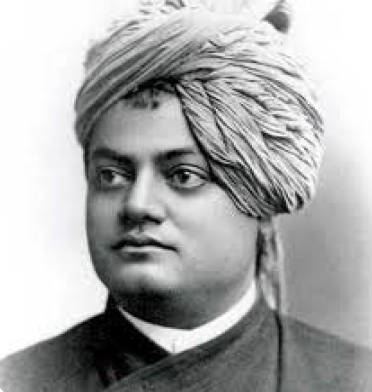
Swami Vivekananda
Strength is life, Weakness is death.
Swami Vivekananda (12 January 1863–4 July 1902), born Narendra Nath Datta, was an Indian Hindu monk. He was a key figure in the introduction of Indian philosophies of Vedanta and Yoga to the western world and was credited with raising interfaith awareness, bringing Hinduism to the status of a major world religion in the late 19th
century. He was a major force in the revival of Hinduism in India and contributed to the notion of nationalism in colonial India. He was the chief disciple of the 19th century saint Ramakrishna and the founder of the
Ramakrishna Math and the Ramakrishna Mission. He is perhaps best known for his inspiring speech beginning with "Sisters and Brothers of America," through which he introduced Hinduism at the Parliament of the World's
Religions in Chicago in 1893.
Born into an aristocratic Bengali family of Calcutta, Vivekananda showed an inclination towards spirituality. He was influenced by his guru Ramakrishna from whom he learnt that all living beings were an embodiment of the
divine self and hence, service to God could be rendered by service to mankind. After the death of his guru,
Vivekananda toured the Indian subcontinent extensively and acquired a first-hand knowledge of the conditions that prevailed in British India. He later travelled to the United States to represent India as a delegate in the 1893 Parliament of World Religions. He conducted hundreds of public and private lectures and classes, disseminating tenets of Hindu philosophy in the United States, England and Europe. In India, Vivekananda is regarded as a

patriotic saint and his birthday is celebrated as the National Youth Day.
Biography

Swami Vivekananda

Posted by Web ratana  |  No comments

Swami Vivekananda
Strength is life, Weakness is death.
Swami Vivekananda (12 January 1863–4 July 1902), born Narendra Nath Datta, was an Indian Hindu monk. He was a key figure in the introduction of Indian philosophies of Vedanta and Yoga to the western world and was credited with raising interfaith awareness, bringing Hinduism to the status of a major world religion in the late 19th
century. He was a major force in the revival of Hinduism in India and contributed to the notion of nationalism in colonial India. He was the chief disciple of the 19th century saint Ramakrishna and the founder of the
Ramakrishna Math and the Ramakrishna Mission. He is perhaps best known for his inspiring speech beginning with "Sisters and Brothers of America," through which he introduced Hinduism at the Parliament of the World's
Religions in Chicago in 1893.
Born into an aristocratic Bengali family of Calcutta, Vivekananda showed an inclination towards spirituality. He was influenced by his guru Ramakrishna from whom he learnt that all living beings were an embodiment of the
divine self and hence, service to God could be rendered by service to mankind. After the death of his guru,
Vivekananda toured the Indian subcontinent extensively and acquired a first-hand knowledge of the conditions that prevailed in British India. He later travelled to the United States to represent India as a delegate in the 1893 Parliament of World Religions. He conducted hundreds of public and private lectures and classes, disseminating tenets of Hindu philosophy in the United States, England and Europe. In India, Vivekananda is regarded as a

patriotic saint and his birthday is celebrated as the National Youth Day.

1:22 AM Share:

Saturday, June 21, 2014

Steve Jobs
Stay hungry, Stay foolish.
Steven Paul Jobs (February 24, 1955 – October 5, 2011) was an American entrepreneur. He is best known as the
co-founder, chairman, and CEO of Apple Inc. Through Apple, he was widely recognized as a charismatic pioneer of the personal computer revolution and for his influential career in the computer and consumer electronics fields. Jobs also co-founded and served as chief executive of Pixar Animation Studios; he became a member of the board of
directors of The Walt Disney Company in 2006, when Disney acquired Pixar.
In the late 1970s, Apple co-founder Steve Wozniak engineered one of the first commercially successful lines of
personal computers, the Apple II series. Jobs was among the first to see the commercial potential of Xerox PARC's mouse-driven graphical user interface, which led to the creation of the Apple Lisa and, one year later, the Macintosh. He also played a role in introducing the LaserWriter, one of the first widely available laser printers, to the market. After a power struggle with the board of directors in 1985, Jobs left Apple and founded NeXT, a computer platform development company specializing in the higher-education and business markets. In 1986, he acquired the computer graphics division of Lucasfilm, which was spun off as Pixar. He was credited in Toy Story (1995) as an executive
producer. He served as CEO and majority shareholder until Disney's purchase of Pixar in 2006. In 1996, after Apple had failed to deliver its operating system, Copland, Gil Amelio turned to NeXT Computer, and the NeXTSTEP platform became the foundation for the Mac OS X. Jobs returned to Apple as an advisor, and took control of the company as an interim CEO. Jobs brought Apple from near bankruptcy to profitability by 1998.
As the new CEO of the company, Jobs oversaw the development of the iMac, iTunes, iPod, iPhone, and iPad, and on the services side, the company's Apple Retail Stores, iTunes Store and the App Store. The success of these products and services provided several years of stable financial returns, and propelled Apple to become the world's most valuable publicly traded company in 2011. The reinvigoration of the company is regarded by many commentators as one of the greatest turnarounds in business history.
In 2003, Jobs was diagnosed with a pancreas neuroendocrine tumor. Though it was initially treated, he reported a hormone imbalance, underwent a liver transplant in 2009, and appeared progressively thinner as his health

declined. On medical leave for most of 2011, Jobs resigned in August that year, and was elected Chairman of the Board. He died of respiratory arrest related to his metastatic tumor on October 5, 2011.
Biography

Staven Jobs

Posted by Web ratana  |  No comments

Steve Jobs
Stay hungry, Stay foolish.
Steven Paul Jobs (February 24, 1955 – October 5, 2011) was an American entrepreneur. He is best known as the
co-founder, chairman, and CEO of Apple Inc. Through Apple, he was widely recognized as a charismatic pioneer of the personal computer revolution and for his influential career in the computer and consumer electronics fields. Jobs also co-founded and served as chief executive of Pixar Animation Studios; he became a member of the board of
directors of The Walt Disney Company in 2006, when Disney acquired Pixar.
In the late 1970s, Apple co-founder Steve Wozniak engineered one of the first commercially successful lines of
personal computers, the Apple II series. Jobs was among the first to see the commercial potential of Xerox PARC's mouse-driven graphical user interface, which led to the creation of the Apple Lisa and, one year later, the Macintosh. He also played a role in introducing the LaserWriter, one of the first widely available laser printers, to the market. After a power struggle with the board of directors in 1985, Jobs left Apple and founded NeXT, a computer platform development company specializing in the higher-education and business markets. In 1986, he acquired the computer graphics division of Lucasfilm, which was spun off as Pixar. He was credited in Toy Story (1995) as an executive
producer. He served as CEO and majority shareholder until Disney's purchase of Pixar in 2006. In 1996, after Apple had failed to deliver its operating system, Copland, Gil Amelio turned to NeXT Computer, and the NeXTSTEP platform became the foundation for the Mac OS X. Jobs returned to Apple as an advisor, and took control of the company as an interim CEO. Jobs brought Apple from near bankruptcy to profitability by 1998.
As the new CEO of the company, Jobs oversaw the development of the iMac, iTunes, iPod, iPhone, and iPad, and on the services side, the company's Apple Retail Stores, iTunes Store and the App Store. The success of these products and services provided several years of stable financial returns, and propelled Apple to become the world's most valuable publicly traded company in 2011. The reinvigoration of the company is regarded by many commentators as one of the greatest turnarounds in business history.
In 2003, Jobs was diagnosed with a pancreas neuroendocrine tumor. Though it was initially treated, he reported a hormone imbalance, underwent a liver transplant in 2009, and appeared progressively thinner as his health

declined. On medical leave for most of 2011, Jobs resigned in August that year, and was elected Chairman of the Board. He died of respiratory arrest related to his metastatic tumor on October 5, 2011.

2:00 AM Share:
Thomas Alva Edison
There is no substitute for hard work.
Thomas Alva Edison, (born February 11, 1847, Milan, Ohio, U.S.—died October 18, 1931, West Orange, New Jersey), American inventor who, singly or jointly, held a world record 1,093 patents. In addition, he created the world’s first industrial research laboratory.
Edison was the quintessential American inventor in the era of Yankee ingenuity. He began his career in 1863, in the
adolescence of the telegraph industry, when virtually the only source of electricity was primitive batteries putting out a low-voltage current. Before he died, in 1931, he had played a critical role in introducing the modern age of electricity. From his laboratories and workshops emanated the phonograph, the carbon-button transmitter for the telephone speaker and microphone, the incandescent lamp, a revolutionary generator of unprecedented efficiency, the first commercial
electric light and power system, an experimental electric railroad, and key elements of motion-picture apparatus, as well as a host of other inventions.Edison was the seventh and last child—the fourth surviving—of Samuel Edison, Jr., and Nancy Elliot Edison. At an early age he developed hearing problems, which have been variously attributed but were most likely due to a familial tendency to mastoiditis. Whatever the cause, Edison’s deafness strongly influenced his behaviour and career, providing the motivation for many of his inventions.
Biography

Thomas Alva Edison

Posted by Web ratana  |  No comments

Thomas Alva Edison
There is no substitute for hard work.
Thomas Alva Edison, (born February 11, 1847, Milan, Ohio, U.S.—died October 18, 1931, West Orange, New Jersey), American inventor who, singly or jointly, held a world record 1,093 patents. In addition, he created the world’s first industrial research laboratory.
Edison was the quintessential American inventor in the era of Yankee ingenuity. He began his career in 1863, in the
adolescence of the telegraph industry, when virtually the only source of electricity was primitive batteries putting out a low-voltage current. Before he died, in 1931, he had played a critical role in introducing the modern age of electricity. From his laboratories and workshops emanated the phonograph, the carbon-button transmitter for the telephone speaker and microphone, the incandescent lamp, a revolutionary generator of unprecedented efficiency, the first commercial
electric light and power system, an experimental electric railroad, and key elements of motion-picture apparatus, as well as a host of other inventions.Edison was the seventh and last child—the fourth surviving—of Samuel Edison, Jr., and Nancy Elliot Edison. At an early age he developed hearing problems, which have been variously attributed but were most likely due to a familial tendency to mastoiditis. Whatever the cause, Edison’s deafness strongly influenced his behaviour and career, providing the motivation for many of his inventions.

1:56 AM Share:
Teamwork
Where there is unity there is always victory.
Teamwork is "work done by several associates with each doing a part but all subordinating personal
prominence to the efficiency of the whole".
In a business setting accounting techniques may be used to provide financial measures of the benefits of teamwork which are useful for justifying the concept. Teamwork is increasingly advocated by health care policy makers as a means of assuring quality and safety in the delivery of services; a committee of the Institute of Medicine recommended in 2000 that patient safety programs "establish interdisciplinary team training programs for providers that
incorporate proven methods of team training, such as simulation."
In health care, one definition of teamwork is "those behaviours that facilitate effective team member interaction," with "team" defined as "a group of two or more individuals who perform some work related task, interact with one
another dynamically, have a shared past, have a foreseeable shared future, and share a common fate." One definition for teamwork proposed in 2008 is "the interdependent components of performance required to effectively coordinate the performance of multiple individuals"; as such, teamwork is "nested within" the broader concept of team

performance which also includes individual-level taskwork. Another definition proposed in 2008 is "a dynamic process involving two or more healthcare professionals with complementary backgrounds and skills, sharing common health goals and exercising concerted physical and mental effort in assessing, planning, or evaluating patient care." A 2012 review of the academic literature found that the word "teamwork" has been used "as a catchall to refer to a number of behavioral processes and emergent states."
Biography

Teamwork

Posted by Web ratana  |  No comments

Teamwork
Where there is unity there is always victory.
Teamwork is "work done by several associates with each doing a part but all subordinating personal
prominence to the efficiency of the whole".
In a business setting accounting techniques may be used to provide financial measures of the benefits of teamwork which are useful for justifying the concept. Teamwork is increasingly advocated by health care policy makers as a means of assuring quality and safety in the delivery of services; a committee of the Institute of Medicine recommended in 2000 that patient safety programs "establish interdisciplinary team training programs for providers that
incorporate proven methods of team training, such as simulation."
In health care, one definition of teamwork is "those behaviours that facilitate effective team member interaction," with "team" defined as "a group of two or more individuals who perform some work related task, interact with one
another dynamically, have a shared past, have a foreseeable shared future, and share a common fate." One definition for teamwork proposed in 2008 is "the interdependent components of performance required to effectively coordinate the performance of multiple individuals"; as such, teamwork is "nested within" the broader concept of team

performance which also includes individual-level taskwork. Another definition proposed in 2008 is "a dynamic process involving two or more healthcare professionals with complementary backgrounds and skills, sharing common health goals and exercising concerted physical and mental effort in assessing, planning, or evaluating patient care." A 2012 review of the academic literature found that the word "teamwork" has been used "as a catchall to refer to a number of behavioral processes and emergent states."

1:52 AM Share:

Thursday, June 19, 2014

Victor Hugo
He who opens a school door, closes a prison.

VICTOR MARIE VICOMETE HUGO, one of the most distinguished French writers, was born February 26th, 1802, at
Besancon, where his father was then commandant of the garrison. He early acquired distinction by his poetic effusions, and before he was thirty years of age, his published works were numerous, and his name famous. Odes and ballads,
romances, dramas, etc., flowed from his prolific pen. Shortly before the revolution of 1830, a literary revolution took place, at the head of which was Hugo. A band of young men, imaginative, ardent, and confident, sought to renovate French literature by departing from classic rules and models, substituting a varied and very irregular verse for the monotonous Alexandrines of the old school. The new school, "la jeune France," as they called themselves, formed the Romanticists, and their opponents the Classicists. The literary war which arose lasted for several years.
Hugo's popularity continued to increase, and in 1837, Louis Philippe made him an officer of the Legion of Honor, and in 1845 a peer of France. After the revolution of 1848, he was elected to represent the city of Paris, both in the Constituent and in the Legislative Assembly, in which he manifested democratic principles, and was one of those members of the
extreme left, who were banished from France for life by Louis Napoleon. He took up his residence in the island of Jersey. In 1852, he assailed the ruler of France in a remarkable political pamphlet, Napoleon le Petit, (Napoleon the Little), which produced a great sensation; but the effect of its severity was weakencd by its undignified virulence. In 1862, he published Les Miserables, in which, with great dramatic force, he handles some of the most important social questions. Hugo's

writings have great faults. They are often extravagant both in form and substance, and sometimes marred by an affected triviality of images and harshness of versification. Yet they have also great excellencies; the command of language is wonderful, and as a lyric poet, Hugo has, perhaps, never been equalled in France.
Biography

Victor Hugo

Posted by Web ratana  |  No comments

Victor Hugo
He who opens a school door, closes a prison.

VICTOR MARIE VICOMETE HUGO, one of the most distinguished French writers, was born February 26th, 1802, at
Besancon, where his father was then commandant of the garrison. He early acquired distinction by his poetic effusions, and before he was thirty years of age, his published works were numerous, and his name famous. Odes and ballads,
romances, dramas, etc., flowed from his prolific pen. Shortly before the revolution of 1830, a literary revolution took place, at the head of which was Hugo. A band of young men, imaginative, ardent, and confident, sought to renovate French literature by departing from classic rules and models, substituting a varied and very irregular verse for the monotonous Alexandrines of the old school. The new school, "la jeune France," as they called themselves, formed the Romanticists, and their opponents the Classicists. The literary war which arose lasted for several years.
Hugo's popularity continued to increase, and in 1837, Louis Philippe made him an officer of the Legion of Honor, and in 1845 a peer of France. After the revolution of 1848, he was elected to represent the city of Paris, both in the Constituent and in the Legislative Assembly, in which he manifested democratic principles, and was one of those members of the
extreme left, who were banished from France for life by Louis Napoleon. He took up his residence in the island of Jersey. In 1852, he assailed the ruler of France in a remarkable political pamphlet, Napoleon le Petit, (Napoleon the Little), which produced a great sensation; but the effect of its severity was weakencd by its undignified virulence. In 1862, he published Les Miserables, in which, with great dramatic force, he handles some of the most important social questions. Hugo's

writings have great faults. They are often extravagant both in form and substance, and sometimes marred by an affected triviality of images and harshness of versification. Yet they have also great excellencies; the command of language is wonderful, and as a lyric poet, Hugo has, perhaps, never been equalled in France.

4:05 PM Share:
Vladimir Lenin
The goal of socialism is Communism.
Vladimir Lenin was one of the leading political figures and revolutionary thinkers of the 20th century, who masterminded the Bolshevik take-over of power in Russia in 1917, and was the architect and first head of the USSR.
Vladimir Ilich Ulyanov was born in Simbirsk on the Volga River on 22 April 1870 into a well-educated family. He excelled at school and went on to study law. At university, he was exposed to radical thinking, and his views were also influenced by the execution of his elder brother, a member of a revolutionary group.
Expelled from university for his radical policies, Lenin completed his law degree as an external student in 1891. He moved to St Petersburg and became a professional revolutionary. Like many of his contemporaries, he was arrested and exiled to Siberia, where he married Nadezhda Krupskaya. After his Siberian exile, Lenin - the pseudonym he adopted in 1901 - spent most of the subsequent decade and a half in western Europe, where he emerged as a prominent figure in the international revolutionary movement and became the leader of the 'Bolshevik' faction of the Russian Social Democratic Worker's Party.
In 1917, exhausted by World War One, Russia was ripe for change. Assisted by the Germans, who hoped that he would
undermine the Russian war effort, Lenin returned home and started working against the provisional government that had overthrown the tsarist regime. He eventually led what was soon to be known as the October Revolution, but was
effectively a coup d'etat. Almost three years of civil war followed. The Bolsheviks were victorious and assumed total
control of the country. During this period of revolution, war and famine, Lenin demonstrated a chilling disregard for the sufferings of his fellow countrymen and mercilessly crushed any opposition.
Although Lenin was ruthless he was also pragmatic. When his efforts to transform the Russian economy to a socialist model stalled, he introduced the New Economic Policy, where a measure of private enterprise was again permitted, a policy that continued for several years after his death. In 1918, Lenin narrowly survived an assassination attempt, but was
severely wounded. His long term health was affected, and in 1922 he suffered a stroke from which he never fully

recovered. In his declining years, he worried about the bureaucratisation of the regime and also expressed concern over the increasing power of his eventual successor Joseph Stalin. Lenin died on 24 January 1924. His corpse was embalmed and placed in a mausoleum on Moscow's Red Square.
Biography

Vladimir Lenin

Posted by Web ratana  |  No comments

Vladimir Lenin
The goal of socialism is Communism.
Vladimir Lenin was one of the leading political figures and revolutionary thinkers of the 20th century, who masterminded the Bolshevik take-over of power in Russia in 1917, and was the architect and first head of the USSR.
Vladimir Ilich Ulyanov was born in Simbirsk on the Volga River on 22 April 1870 into a well-educated family. He excelled at school and went on to study law. At university, he was exposed to radical thinking, and his views were also influenced by the execution of his elder brother, a member of a revolutionary group.
Expelled from university for his radical policies, Lenin completed his law degree as an external student in 1891. He moved to St Petersburg and became a professional revolutionary. Like many of his contemporaries, he was arrested and exiled to Siberia, where he married Nadezhda Krupskaya. After his Siberian exile, Lenin - the pseudonym he adopted in 1901 - spent most of the subsequent decade and a half in western Europe, where he emerged as a prominent figure in the international revolutionary movement and became the leader of the 'Bolshevik' faction of the Russian Social Democratic Worker's Party.
In 1917, exhausted by World War One, Russia was ripe for change. Assisted by the Germans, who hoped that he would
undermine the Russian war effort, Lenin returned home and started working against the provisional government that had overthrown the tsarist regime. He eventually led what was soon to be known as the October Revolution, but was
effectively a coup d'etat. Almost three years of civil war followed. The Bolsheviks were victorious and assumed total
control of the country. During this period of revolution, war and famine, Lenin demonstrated a chilling disregard for the sufferings of his fellow countrymen and mercilessly crushed any opposition.
Although Lenin was ruthless he was also pragmatic. When his efforts to transform the Russian economy to a socialist model stalled, he introduced the New Economic Policy, where a measure of private enterprise was again permitted, a policy that continued for several years after his death. In 1918, Lenin narrowly survived an assassination attempt, but was
severely wounded. His long term health was affected, and in 1922 he suffered a stroke from which he never fully

recovered. In his declining years, he worried about the bureaucratisation of the regime and also expressed concern over the increasing power of his eventual successor Joseph Stalin. Lenin died on 24 January 1924. His corpse was embalmed and placed in a mausoleum on Moscow's Red Square.

4:01 PM Share:
William Shakespeare
Listen to many, Speak to a few.
William Shakespeare's reputation as dramatist and poet actor is unique and he is considered by many to be the greatest playwright of all time, although many of the facts of his life remain mysterious.
William Shakespeare was born in Stratford-upon-Avon in Warwickshire and was baptised on 26 April 1564. His father was a glovemaker and wool merchant and his mother, Mary Arden, the daughter of a well-to-do local landowner. Shakespeare was probably educated in Stratford's grammar school. The next documented event in Shakespeare's life is his marriage in 1582 to Anne Hathaway, daughter of a farmer. The couple had a daughter the following year and twins in 1585. There is now another gap, referred to by some scholars as 'the lost years', with Shakespeare only reappearing in London in 1592, when he was already working in the theatre.
Shakespeare's acting career was spent with the Lord Chamberlain's Company, which was renamed the King's Company in 1603 when James succeeded to the throne. Among the actors in the group was the famous Richard Burbage. The partnership
acquired interests in two theatres in the Southwark area of London, near the banks of the Thames - the Globe and the Blackfriars.
Shakespeare's poetry was published before his plays, with two poems appearing in 1593 and 1594, dedicated to his patron
Henry Wriothesley, Earl of Southampton. Most of Shakespeare's sonnets were probably written at this time as well. Records of Shakespeare's plays begin to appear in 1594, and he produced roughly two a year until around 1611. His earliest plays
include 'Henry VI' and 'Titus Andronicus'. 'A Midsummer Night's Dream', 'The Merchant of Venice' and 'Richard II' all date from the mid to late 1590s. Some of his most famous tragedies were written in the early 1600s including 'Hamlet', 'Othello', 'King Lear' and 'Macbeth'. His late plays, often known as the Romances, date from 1608 onwards and include 'The Tempest'.

Shakespeare spent the last five years of his life in Stratford, by now a wealthy man. He died on 23 April 1616 and was buried in Holy Trinity Church in Stratford. The first collected edition of his works was published in 1623 and is known as 'the First Folio'.
Biography

William Shakespeare

Posted by Web ratana  |  No comments

William Shakespeare
Listen to many, Speak to a few.
William Shakespeare's reputation as dramatist and poet actor is unique and he is considered by many to be the greatest playwright of all time, although many of the facts of his life remain mysterious.
William Shakespeare was born in Stratford-upon-Avon in Warwickshire and was baptised on 26 April 1564. His father was a glovemaker and wool merchant and his mother, Mary Arden, the daughter of a well-to-do local landowner. Shakespeare was probably educated in Stratford's grammar school. The next documented event in Shakespeare's life is his marriage in 1582 to Anne Hathaway, daughter of a farmer. The couple had a daughter the following year and twins in 1585. There is now another gap, referred to by some scholars as 'the lost years', with Shakespeare only reappearing in London in 1592, when he was already working in the theatre.
Shakespeare's acting career was spent with the Lord Chamberlain's Company, which was renamed the King's Company in 1603 when James succeeded to the throne. Among the actors in the group was the famous Richard Burbage. The partnership
acquired interests in two theatres in the Southwark area of London, near the banks of the Thames - the Globe and the Blackfriars.
Shakespeare's poetry was published before his plays, with two poems appearing in 1593 and 1594, dedicated to his patron
Henry Wriothesley, Earl of Southampton. Most of Shakespeare's sonnets were probably written at this time as well. Records of Shakespeare's plays begin to appear in 1594, and he produced roughly two a year until around 1611. His earliest plays
include 'Henry VI' and 'Titus Andronicus'. 'A Midsummer Night's Dream', 'The Merchant of Venice' and 'Richard II' all date from the mid to late 1590s. Some of his most famous tragedies were written in the early 1600s including 'Hamlet', 'Othello', 'King Lear' and 'Macbeth'. His late plays, often known as the Romances, date from 1608 onwards and include 'The Tempest'.

Shakespeare spent the last five years of his life in Stratford, by now a wealthy man. He died on 23 April 1616 and was buried in Holy Trinity Church in Stratford. The first collected edition of his works was published in 1623 and is known as 'the First Folio'.

3:58 PM Share:
Winston Churchill
The price of greatness is responsibility.
Winston Leonard Spencer Churchill was born on 30 November 1874 at Blenheim Palace in Oxfordshire. His father was the prominent Tory politician, Lord Randolph Churchill. Churchill attended the Royal Military College, Sandhurst, before
embarking on an army career. He saw action on the North West Frontier of India and in the Sudan. While working as a
journalist during the Boer War he was captured and made a prisoner-of-war before escaping.
In 1900, Churchill became Conservative member of parliament for Oldham. But he became disaffected with his party and in 1904 joined the Liberal Party. When the Liberals won the 1905 election, Churchill was appointed undersecretary at the Colonial Office. In 1908 he entered the Cabinet as president of the Board of Trade, becoming home secretary in 1910. The following year he became first lord of the Admiralty. He held this post in the first months of World War One but after the disastrous Dardanelles expedition, for which he was blamed, he resigned. He joined the army, serving for a time on the
Western Front. In 1917, he was back in government as minister of munitions. From 1919 to 1921 he was secretary of state for war and air, and from 1924-1929 was chancellor of the exchequer.
The next decade were his 'wilderness years', in which his opposition to Indian self-rule and his support for Edward VIII
during the 'Abdication Crisis' made him unpopular, while his warnings about the rise of Nazi Germany and the need for
British rearmament were ignored. When war broke out in 1939, Churchill became first lord of the Admiralty. In May 1940, Neville Chamberlain resigned as prime minister and Churchill took his place. His refusal to surrender to Nazi Germany
inspired the country. He worked tirelessly throughout the war, building strong relations with US President Roosevelt while maintaining a sometimes difficult alliance with the Soviet Union.
Churchill lost power in the 1945 post-war election but remained leader of the opposition, voicing apprehensions about the Cold War (he popularised the term 'Iron Curtain') and encouraging European and trans-Atlantic unity. In 1951, he became prime minister again. He resigned in 1955, but remained an MP until shortly before his death. As well as his many political achievements, he left a legacy of an impressive number of publications and in 1953 won the Nobel Prize for Literature.

Churchill died on 24 January 1965 and was given a state funeral.
Biography

Winston Churchill

Posted by Web ratana  |  No comments

Winston Churchill
The price of greatness is responsibility.
Winston Leonard Spencer Churchill was born on 30 November 1874 at Blenheim Palace in Oxfordshire. His father was the prominent Tory politician, Lord Randolph Churchill. Churchill attended the Royal Military College, Sandhurst, before
embarking on an army career. He saw action on the North West Frontier of India and in the Sudan. While working as a
journalist during the Boer War he was captured and made a prisoner-of-war before escaping.
In 1900, Churchill became Conservative member of parliament for Oldham. But he became disaffected with his party and in 1904 joined the Liberal Party. When the Liberals won the 1905 election, Churchill was appointed undersecretary at the Colonial Office. In 1908 he entered the Cabinet as president of the Board of Trade, becoming home secretary in 1910. The following year he became first lord of the Admiralty. He held this post in the first months of World War One but after the disastrous Dardanelles expedition, for which he was blamed, he resigned. He joined the army, serving for a time on the
Western Front. In 1917, he was back in government as minister of munitions. From 1919 to 1921 he was secretary of state for war and air, and from 1924-1929 was chancellor of the exchequer.
The next decade were his 'wilderness years', in which his opposition to Indian self-rule and his support for Edward VIII
during the 'Abdication Crisis' made him unpopular, while his warnings about the rise of Nazi Germany and the need for
British rearmament were ignored. When war broke out in 1939, Churchill became first lord of the Admiralty. In May 1940, Neville Chamberlain resigned as prime minister and Churchill took his place. His refusal to surrender to Nazi Germany
inspired the country. He worked tirelessly throughout the war, building strong relations with US President Roosevelt while maintaining a sometimes difficult alliance with the Soviet Union.
Churchill lost power in the 1945 post-war election but remained leader of the opposition, voicing apprehensions about the Cold War (he popularised the term 'Iron Curtain') and encouraging European and trans-Atlantic unity. In 1951, he became prime minister again. He resigned in 1955, but remained an MP until shortly before his death. As well as his many political achievements, he left a legacy of an impressive number of publications and in 1953 won the Nobel Prize for Literature.

Churchill died on 24 January 1965 and was given a state funeral.

3:54 PM Share:
Walt Disney
It’s kind of fun to do the impossible.
Walter Elias "Walt" Disney (December 5, 1901 – December 15, 1966) was an American film producer, director,
screenwriter, voice actor, animator, entrepreneur, entertainer, international icon, and philanthropist, well known for his influence in the field of entertainment during the 20th century. Along with his brother Roy O. Disney, he was
co-founder of Walt Disney Productions, which later became one of the best-known motion picture producers in the world. The corporation is now known as The Walt Disney Company and had an annual revenue of approximately US$36 billion in the 2010 financial year.
Disney is particularly noted as a film producer and a popular showman, as well as an innovator in animation and theme park design. He and his staff created some of the world's most well-known fictional characters including Mickey Mouse, for whom Disney himself provided the original voice. During his lifetime he received four honorary Academy Awards and won 22 Academy Awards from a total of 59 nominations, including a record four in one year, giving him more awards and nominations than any other individual in history. Disney also won seven Emmy Awards and gave his name to the Disneyland and Walt Disney World Resort theme parks in the U.S., as well as the international resorts Tokyo Disney Resort,
Disneyland Paris, and Hong Kong Disneyland.

The year after his December 15, 1966 death from lung cancer in Burbank, California, construction began on Walt Disney World Resort in Florida. His brother Roy Disney inaugurated the Magic Kingdom on October 1, 1971.
Biography

Walt Disney

Posted by Web ratana  |  No comments

Walt Disney
It’s kind of fun to do the impossible.
Walter Elias "Walt" Disney (December 5, 1901 – December 15, 1966) was an American film producer, director,
screenwriter, voice actor, animator, entrepreneur, entertainer, international icon, and philanthropist, well known for his influence in the field of entertainment during the 20th century. Along with his brother Roy O. Disney, he was
co-founder of Walt Disney Productions, which later became one of the best-known motion picture producers in the world. The corporation is now known as The Walt Disney Company and had an annual revenue of approximately US$36 billion in the 2010 financial year.
Disney is particularly noted as a film producer and a popular showman, as well as an innovator in animation and theme park design. He and his staff created some of the world's most well-known fictional characters including Mickey Mouse, for whom Disney himself provided the original voice. During his lifetime he received four honorary Academy Awards and won 22 Academy Awards from a total of 59 nominations, including a record four in one year, giving him more awards and nominations than any other individual in history. Disney also won seven Emmy Awards and gave his name to the Disneyland and Walt Disney World Resort theme parks in the U.S., as well as the international resorts Tokyo Disney Resort,
Disneyland Paris, and Hong Kong Disneyland.

The year after his December 15, 1966 death from lung cancer in Burbank, California, construction began on Walt Disney World Resort in Florida. His brother Roy Disney inaugurated the Magic Kingdom on October 1, 1971.

3:49 PM Share:
Warren Edward Buffett
Our favorite holding period is forever.
Warren Edward Buffett (born August 30, 1930) is an American business magnate, investor, and philanthropist. He is widely considered the most successful investor of the 20th century. Buffett is the primary shareholder, chairman and CEO of
Berkshire Hathaway and consistently ranked among the world's wealthiest people. He was ranked as the world's wealthiest person in 2008 and as the third wealthiest person in 2011. In 2012, American magazine Time named Buffett one of the most
influential people in the world.
Buffett is called the "Wizard of Omaha", "Oracle of Omaha", or the "Sage of Omaha" and is noted for his adherence to the
value investing philosophy and for his personal frugality despite his immense wealth. Buffett is also a notable
philanthropist, having pledged to give away 99 percent of his fortune to philanthropic causes, primarily via the Gates
Foundation. On April 11, 2012, he was diagnosed with prostate cancer, for which he completed treatment in September 2012.
Buffett’s speeches are known for mixing business discussions with humor. Each year, Buffett presides over Berkshire
Hathaway’s annual shareholder meeting in the Qwest Center in Omaha, Nebraska, an event drawing over 20,000 visitors from both United States and abroad, giving it the nickname “Woodstock of Capitalism”. Berkshire’s annual reports and letters to shareholders, prepared by Buffett, frequently receive coverage by the financial media. Buffett’s writings are known for

containing quotations from sources as ranging between the Bible and Mae West, as well as advice in a Midwestern folk style, and numerous jokes.
Biography

Warren Edward Buffett

Posted by Web ratana  |  No comments

Warren Edward Buffett
Our favorite holding period is forever.
Warren Edward Buffett (born August 30, 1930) is an American business magnate, investor, and philanthropist. He is widely considered the most successful investor of the 20th century. Buffett is the primary shareholder, chairman and CEO of
Berkshire Hathaway and consistently ranked among the world's wealthiest people. He was ranked as the world's wealthiest person in 2008 and as the third wealthiest person in 2011. In 2012, American magazine Time named Buffett one of the most
influential people in the world.
Buffett is called the "Wizard of Omaha", "Oracle of Omaha", or the "Sage of Omaha" and is noted for his adherence to the
value investing philosophy and for his personal frugality despite his immense wealth. Buffett is also a notable
philanthropist, having pledged to give away 99 percent of his fortune to philanthropic causes, primarily via the Gates
Foundation. On April 11, 2012, he was diagnosed with prostate cancer, for which he completed treatment in September 2012.
Buffett’s speeches are known for mixing business discussions with humor. Each year, Buffett presides over Berkshire
Hathaway’s annual shareholder meeting in the Qwest Center in Omaha, Nebraska, an event drawing over 20,000 visitors from both United States and abroad, giving it the nickname “Woodstock of Capitalism”. Berkshire’s annual reports and letters to shareholders, prepared by Buffett, frequently receive coverage by the financial media. Buffett’s writings are known for

containing quotations from sources as ranging between the Bible and Mae West, as well as advice in a Midwestern folk style, and numerous jokes.

3:46 PM Share:

Wednesday, June 18, 2014

Will Rogers
Never miss a good chance to shut up.
Will Rogers was first an Indian, a cowboy and a national figure.
Born in 1879 on a large ranch in the Cherokee Nation near what later would become Oologah, Oklahoma, Will Rogers
was taught by a freed slave how to use a lasso as a tool to work Texas Longhorn cattle on the family ranch. As he grew
older, Will Rogers' roping skills developed so special that he was listed in the Guinness Book of Records for throwing three lassos at once: One rope caught the running horse's neck, the other would hoop around the rider and the third swooped up under the horse to loop all four legs. Will Rogers' unsurpassed lariat feats were recorded in the classic movie, "The Ropin' Fool."
His hard-earned skills won him jobs trick roping in wild west shows and on the vaudeville stages where, soon, he started telling small jokes. Quickly, his wise cracks and folksy observations became more prized by audiences than his expert roping. He became recognized as being a very informed and smart philosopher--telling the truth in very simple words so that
everyone could understand. After the 10th grade, Will Rogers dropped out of school to become a cowboy in a cattle drive. He always regretted that he didn't finish school, but he made sure that he never stopped learning--reading, thinking and talking to smart people. His hard work paid off.
Will Rogers was the star of Broadway and 71 movies of the 1920s and 1930s; a popular broadcaster; besides writing more than 4,000 syndicated newspaper columns and befriending Presidents, Senators and Kings. During his lifetime, he traveled around the globe three times-- meeting people, covering wars, talking about peace and learning everything possible.
He wrote six books. In fact he published more than two million words. He was the first big time radio commentator, was a guest at the White House and his opinions were sought by the leaders of the world. Inside himself, Will Rogers remained a simple Oklahoma cowboy. "I never met a man I didn't like," was his credo of genuine love and respect for humanity and all people everywhere. He gave his own money to disaster victims and raised thousands for the Red Cross and Salvation Army.
At home, either on his ranch in Oklahoma or California, he always enjoyed riding horseback, roping steers or playing polo. He would scratch his head, grin and quip that he figured there was something wrong with anybody that didn't like a horse.
Jim Rogers, 1915-2000, after starring in some cowboy movies as a young man, spent his life as a horse and cattle rancher.
Betty and Will Rogers's youngest son, Fred, died of diphtheria when he was two. There were eight children born to Will Rogers' parents, but only four reached adulthood on the rugged frontier of 19th Century Indian Territory.

While a fast horse thrilled Will Rogers, he also loved flying. It was on a flight to Alaska in 1935 with a daring one-eyed Oklahoma pilot named Wiley Post that their plane crashed and both men lost their lives.
Biography

Will Rogers

Posted by Web ratana  |  No comments

Will Rogers
Never miss a good chance to shut up.
Will Rogers was first an Indian, a cowboy and a national figure.
Born in 1879 on a large ranch in the Cherokee Nation near what later would become Oologah, Oklahoma, Will Rogers
was taught by a freed slave how to use a lasso as a tool to work Texas Longhorn cattle on the family ranch. As he grew
older, Will Rogers' roping skills developed so special that he was listed in the Guinness Book of Records for throwing three lassos at once: One rope caught the running horse's neck, the other would hoop around the rider and the third swooped up under the horse to loop all four legs. Will Rogers' unsurpassed lariat feats were recorded in the classic movie, "The Ropin' Fool."
His hard-earned skills won him jobs trick roping in wild west shows and on the vaudeville stages where, soon, he started telling small jokes. Quickly, his wise cracks and folksy observations became more prized by audiences than his expert roping. He became recognized as being a very informed and smart philosopher--telling the truth in very simple words so that
everyone could understand. After the 10th grade, Will Rogers dropped out of school to become a cowboy in a cattle drive. He always regretted that he didn't finish school, but he made sure that he never stopped learning--reading, thinking and talking to smart people. His hard work paid off.
Will Rogers was the star of Broadway and 71 movies of the 1920s and 1930s; a popular broadcaster; besides writing more than 4,000 syndicated newspaper columns and befriending Presidents, Senators and Kings. During his lifetime, he traveled around the globe three times-- meeting people, covering wars, talking about peace and learning everything possible.
He wrote six books. In fact he published more than two million words. He was the first big time radio commentator, was a guest at the White House and his opinions were sought by the leaders of the world. Inside himself, Will Rogers remained a simple Oklahoma cowboy. "I never met a man I didn't like," was his credo of genuine love and respect for humanity and all people everywhere. He gave his own money to disaster victims and raised thousands for the Red Cross and Salvation Army.
At home, either on his ranch in Oklahoma or California, he always enjoyed riding horseback, roping steers or playing polo. He would scratch his head, grin and quip that he figured there was something wrong with anybody that didn't like a horse.
Jim Rogers, 1915-2000, after starring in some cowboy movies as a young man, spent his life as a horse and cattle rancher.
Betty and Will Rogers's youngest son, Fred, died of diphtheria when he was two. There were eight children born to Will Rogers' parents, but only four reached adulthood on the rugged frontier of 19th Century Indian Territory.

While a fast horse thrilled Will Rogers, he also loved flying. It was on a flight to Alaska in 1935 with a daring one-eyed Oklahoma pilot named Wiley Post that their plane crashed and both men lost their lives.

11:32 PM Share:
WOODY ALLEN
Eighty percent of success is showing up.
WOODY ALLEN - Date of Birth: December 1, 1935
Born as Allen Stewart Konigsberg in Brooklyn, New York, this multi-talented actor, director, writer, and musician began his career as a comedian and playwright. He was a television gag writer before writing and starring in his first feature film, What's New, Pussycat? Take the Money and Run marked Allen's directorial debut in a hilarious parody of crime films and documentaries.
Allen's films are characterized by their neurotic, urban-Jewish shtick and can be dated by the female lead—who is
generally his current lover of choice. Past femmes include Louise Lasser, Diane Keaton and Mia Farrow.
Reclusive and anti-Hollywood, Allen's critical moment in the spotlight was not for his work as a filmmaker, but for his
affair with Farrow's (college-age) adopted daughter, Soon-Yi Previn. In 1992, Allen filed for custody of their three
children and later made shocking headlines when Farrow accused him of molesting their adopted daughter Dylan. While experts found no evidence to substantiate these allegations, Allen's reputation had already been trashed in the tabloids. After a lengthy and very public court battle, Allen lost custody of the three children. He married Soon-Yi in December 1997 and the two now have two children together.
"If you're an entertainer," Allen says, "your private life is public, that's what happens. Over the years, I've got used to that. Sometimes they write wonderful things, sometimes they write what a fool you are. That's part of what it is to be in the
public eye."

Over the years, Allen has won an astounding number of awards, including three Academy Awards and two Golden Globes. His most recent Golden Globe was for his Midnight in Paris screenplay. He's also received two Academy Award nominations for Best Original Screenplay and Best Director for his work on the film. Allen followed up Midnight in Paris with To Rome With Love (2012), which follows the intersecting stories of both foreigners and Italians in Rome.
Biography

Woody Allen

Posted by Web ratana  |  No comments

WOODY ALLEN
Eighty percent of success is showing up.
WOODY ALLEN - Date of Birth: December 1, 1935
Born as Allen Stewart Konigsberg in Brooklyn, New York, this multi-talented actor, director, writer, and musician began his career as a comedian and playwright. He was a television gag writer before writing and starring in his first feature film, What's New, Pussycat? Take the Money and Run marked Allen's directorial debut in a hilarious parody of crime films and documentaries.
Allen's films are characterized by their neurotic, urban-Jewish shtick and can be dated by the female lead—who is
generally his current lover of choice. Past femmes include Louise Lasser, Diane Keaton and Mia Farrow.
Reclusive and anti-Hollywood, Allen's critical moment in the spotlight was not for his work as a filmmaker, but for his
affair with Farrow's (college-age) adopted daughter, Soon-Yi Previn. In 1992, Allen filed for custody of their three
children and later made shocking headlines when Farrow accused him of molesting their adopted daughter Dylan. While experts found no evidence to substantiate these allegations, Allen's reputation had already been trashed in the tabloids. After a lengthy and very public court battle, Allen lost custody of the three children. He married Soon-Yi in December 1997 and the two now have two children together.
"If you're an entertainer," Allen says, "your private life is public, that's what happens. Over the years, I've got used to that. Sometimes they write wonderful things, sometimes they write what a fool you are. That's part of what it is to be in the
public eye."

Over the years, Allen has won an astounding number of awards, including three Academy Awards and two Golden Globes. His most recent Golden Globe was for his Midnight in Paris screenplay. He's also received two Academy Award nominations for Best Original Screenplay and Best Director for his work on the film. Allen followed up Midnight in Paris with To Rome With Love (2012), which follows the intersecting stories of both foreigners and Italians in Rome.

11:24 PM Share:
Get updates in your email box
Complete the form below, and we'll send you the best coupons.

Deliver via FeedBurner

Labels

Guide

To easy find some information that you need we added a search button that you can type on it and click search.and we have release text to make you easy find.please give us the comment to develop this page.Thank you!

About Us

Hello everyone this web page make in order give you the information about English language. There are English Grammar that we take form some books, information technology and some news a round the world that we hope to make more information for you.
Proudly Powered by Blogger.
back to top